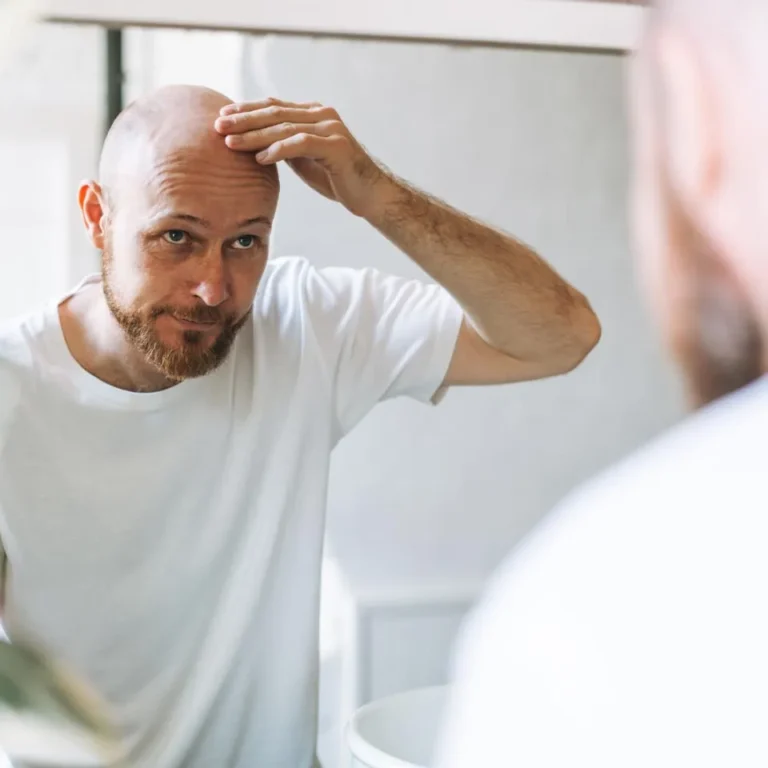
The first thing to clarify about male alopecia is that it is not a disease.
The term “alopecia” comes from the Greek alopex — meaning “fox”, an animal known for shedding its fur in patches.
It refers to the shortening of the hair growth phase, leading to weaker, thinner hair and, over time, visible thinning.
This condition is far more common in men than in women.
While 30–50% of women experience some form of alopecia during their lifetime, the percentage rises to around 80% of men.
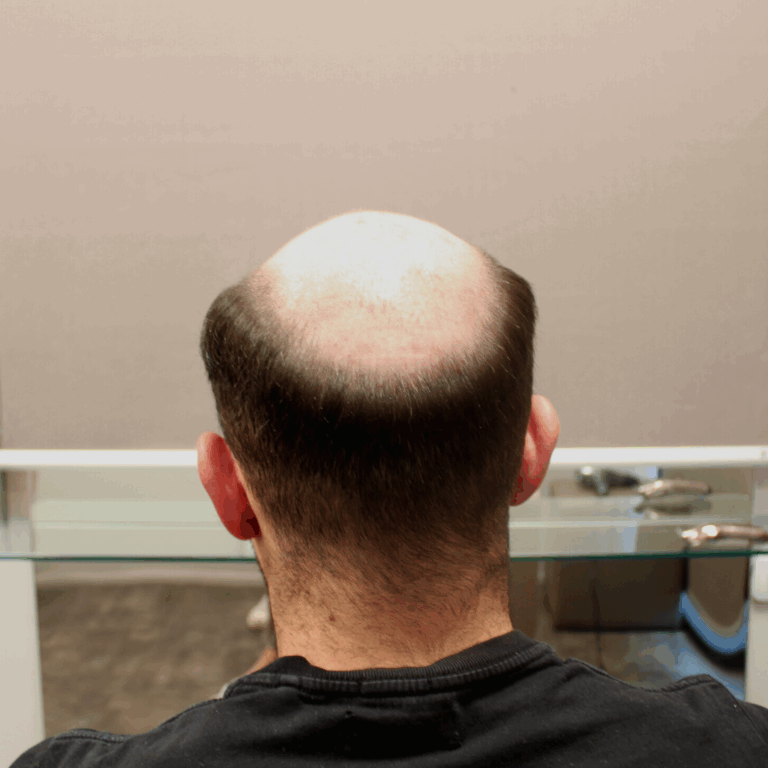
In male alopecia, specific areas of the scalp are affected — particularly the frontal hairline, temples, and crown.
Contrary to popular belief, this doesn’t always result in complete baldness; rather, it’s the outcome of a complex and progressive process that leads to hair miniaturisation and eventual loss.
Why Is Male Alopecia So Common?
Alopecia can be triggered by different factors depending on the individual, but one of the main causes is linked to the malfunctioning of an enzyme called 5α-reductase.
In people predisposed to alopecia, this enzyme converts testosterone into dihydrotestosterone (DHT) — a derivative that binds to hair follicles and progressively weakens and shrinks them.
This hormonal process causes hair to become thinner, more fragile, and less pigmented until the follicle eventually stops producing hair altogether.
Since DHT is present in greater quantities in men, male alopecia is naturally more widespread than female alopecia.
Types and Causes of Alopecia
When referring to male alopecia, we generally talk about androgenetic alopecia, but several other forms exist.
Based on the affected areas and the pattern of hair loss, the main types are:
- Androgenetic alopecia (the classic “male pattern baldness”)
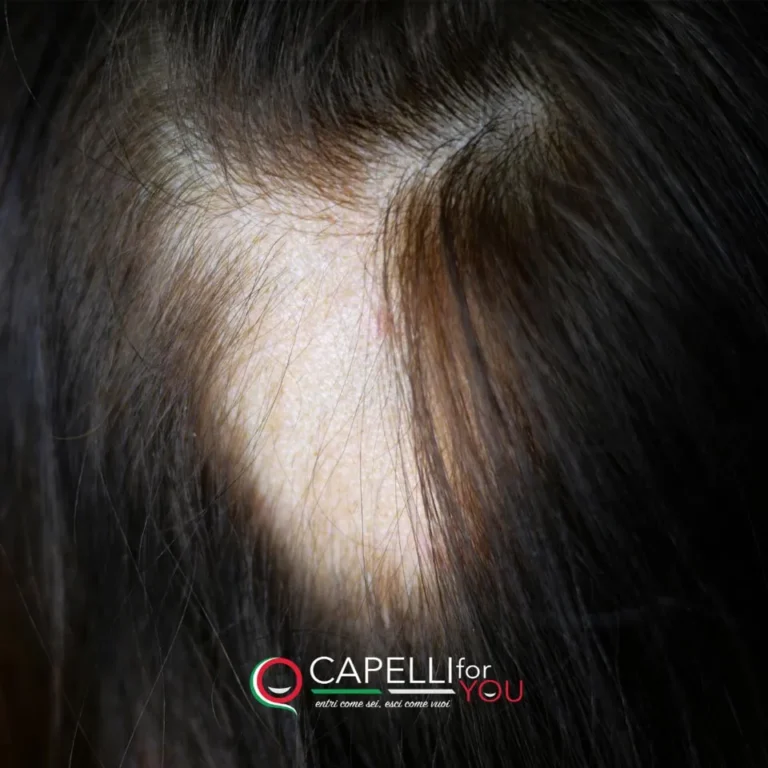
- Alopecia areata (patchy hair loss, often circular and localised)
- Traction alopecia (caused by prolonged tension on the hair)
While androgenetic alopecia is primarily hormonal and genetic, other factors can contribute, including:
- Genetic predisposition — inherited sensitivity to DHT
- Nutritional deficiencies, especially in B vitamins
- Stress and emotional strain, which can disrupt hormonal balance
- Excess sebum, leading to seborrhoeic alopecia
Each form has its own origin and progression, but they all share one key characteristic — a gradual weakening of the hair follicle.
Hair Prostheses for Men: A Reliable Solution
Although male alopecia isn’t a medical illness, it can have a profound emotional and psychological impact.
Losing hair often affects self-image and confidence, influencing how a person feels in social and professional settings.
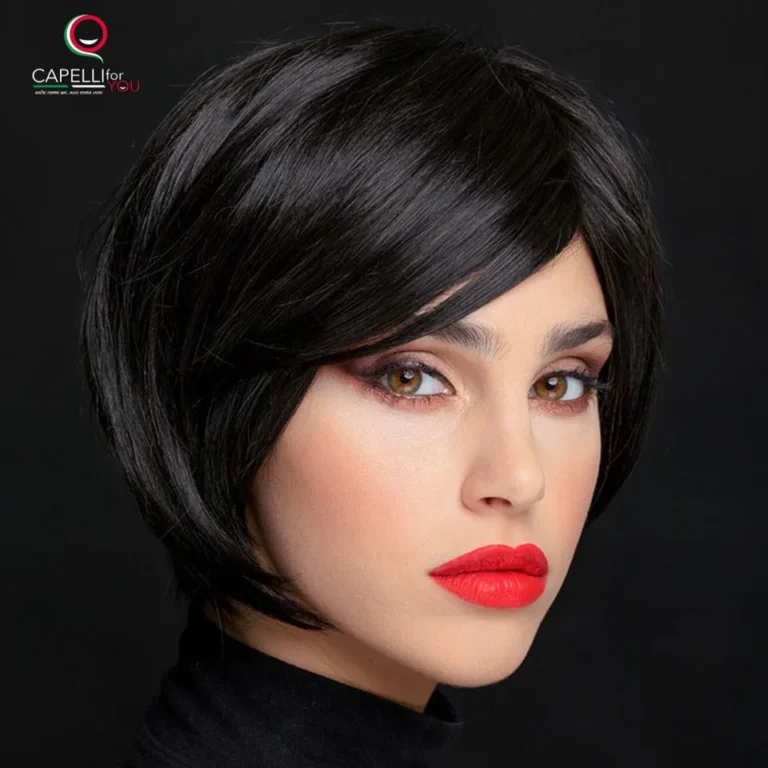
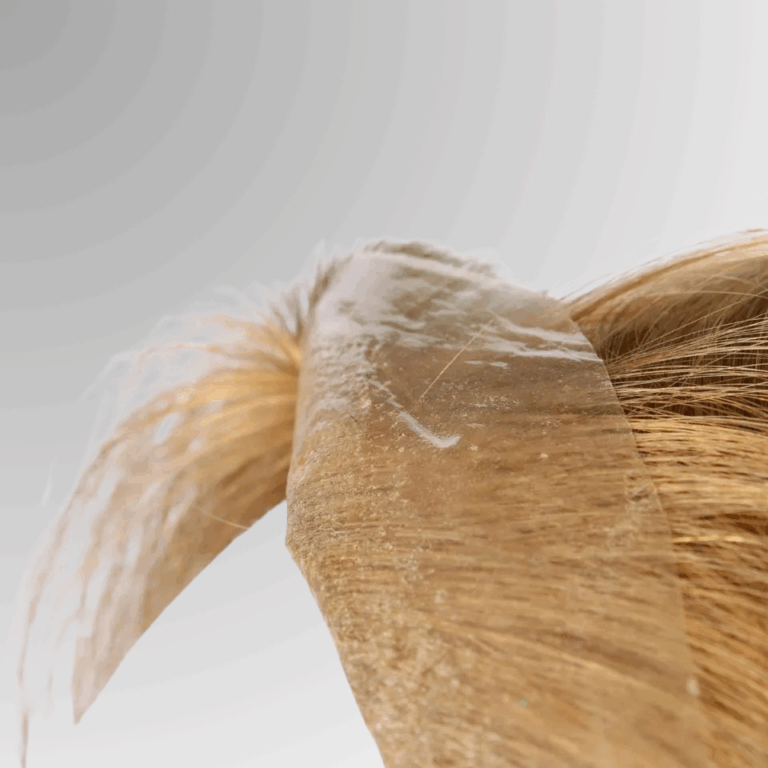
For many, non-surgical hair replacement systems, such as custom-made hair prostheses, represent a practical and effective solution.
They restore the natural appearance of a full head of hair instantly, without the need for invasive treatments or recovery time.
Whether the goal is to overcome discomfort caused by hair loss or simply to rediscover one’s desired look,
Capelli For You offers advanced, custom-tailored prosthetic solutions that help men regain not just their hair — but their confidence and sense of self.