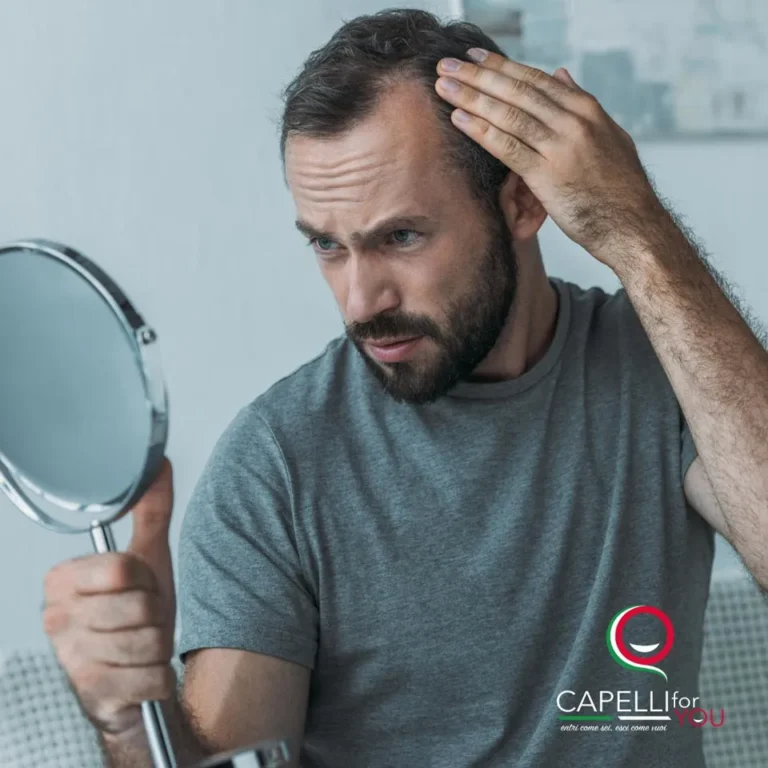
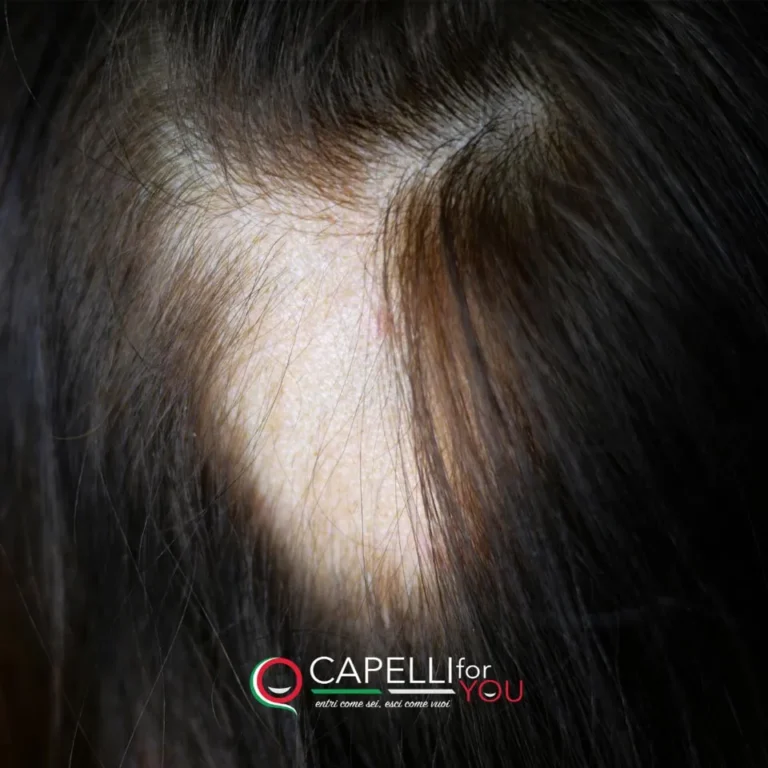
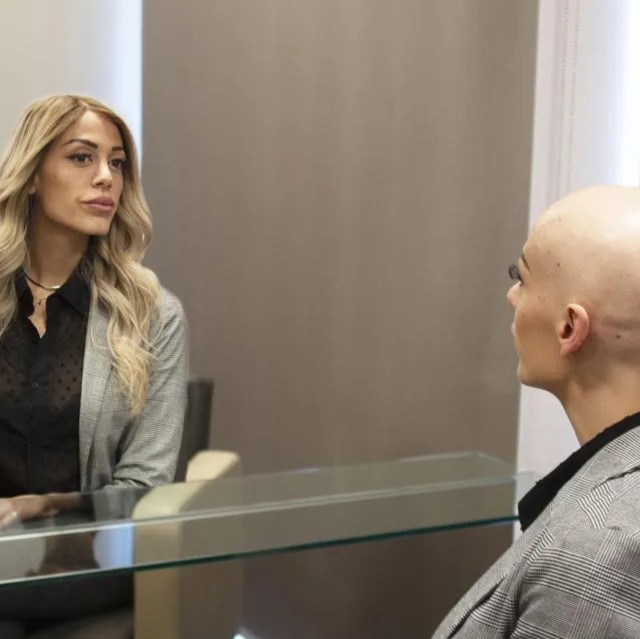
Female baldness is a widespread condition that, according to recent studies, affects around four million women in Italy.
About 30% of Italian women experience some form of hair loss, usually beginning around the age of 50, with androgenetic alopecia being the most common cause.
As we’ve already discussed in previous articles, this phenomenon tends to have a greater emotional and psychological impact on women, as hair is deeply linked to one’s self-image and sense of femininity.
Let’s take a closer look at the symptoms, features, and underlying causes of female baldness.
Characteristics and Symptoms
A genetic predisposition is one of the defining traits of androgenetic alopecia.
If similar cases have occurred in the family — parents, grandparents, or siblings — the likelihood of developing the condition is significantly higher.
Unlike in men, female androgenetic alopecia appears later in life and affects different areas of the scalp.
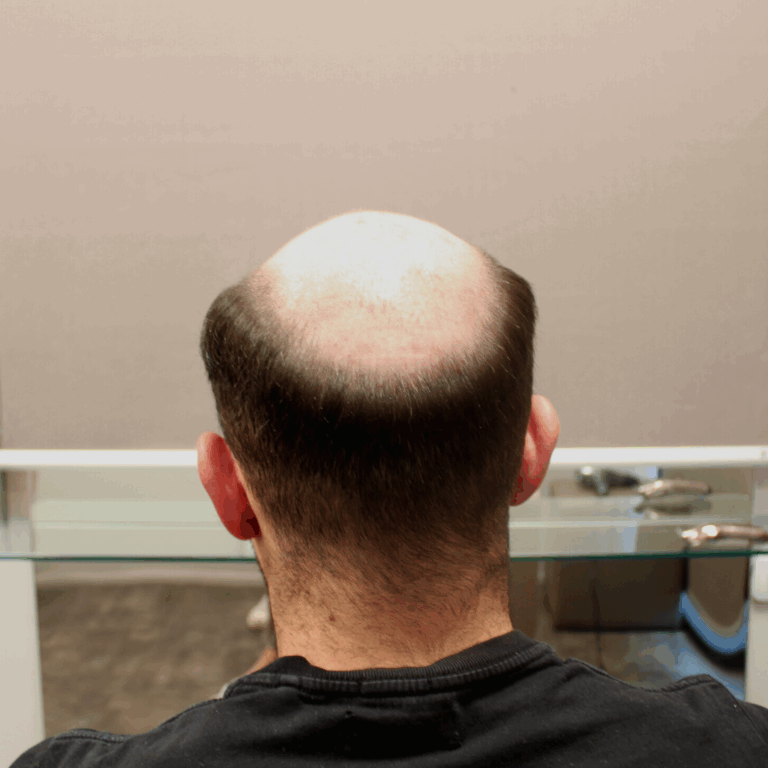
In women, hair thinning typically occurs on the crown and frontal-temporal regions, whereas in men, it primarily affects the frontal-occipital zone.
Another distinctive feature is the gradual progression of the condition.
In women, thinning tends to be concentrated on the top of the head, while the frontal hairline is usually preserved. However, many of the remaining hairs appear miniaturised and weakened.
Symptoms generally become noticeable between the ages of 30 and 40, whereas men often experience hair loss much earlier.
Causes of Female Baldness
The main cause of female hair loss is the interaction between androgen hormones and the hair follicles.
It’s not the amount of androgens that matters most, but rather the sensitivity of the follicles to these hormones.
In fact, studies show that both bald and non-bald men have similar androgen levels — confirming that the key factor lies in the follicles’ response to hormonal activity.
In women who produce higher levels of androgens, this sensitivity tends to be more pronounced, increasing the risk of alopecia.
Conditions such as acne, seborrhoea, or hypertrichosis (excessive hair growth) are often linked to a higher likelihood of developing varying degrees of alopecia, though not always directly correlated.
On the other hand, oestrogen hormones play a crucial protective role.
During a woman’s fertile years, higher oestrogen levels help maintain hair vitality by balancing androgen activity and supporting healthy growth.
When oestrogen production naturally declines — typically between ages 30 and 40, and more markedly after menopause — this balance is disrupted, leading to greater hair thinning.
Other triggers include postpartum hormonal changes and certain hormonal treatments (oestrogen-progestin therapies).
Ultimately, while several factors can contribute to female baldness, genetic predisposition remains the most decisive element.
Support from Capelli For You
At Capelli For You, we’ve been supporting women for years in finding effective, natural-looking, and non-invasive solutions to restore their hair and confidence.
Our experts provide personalised consultations to help every woman rediscover her original beauty and self-assurance — with results that look and feel completely natural.